Process · 22 Sep 2026 · 6 min read
Custom software development cost: what drives the price
What drives custom software development cost: scope, integrations, team shape and risk, plus how fixed scope, time and materials and dedicated teams compare.
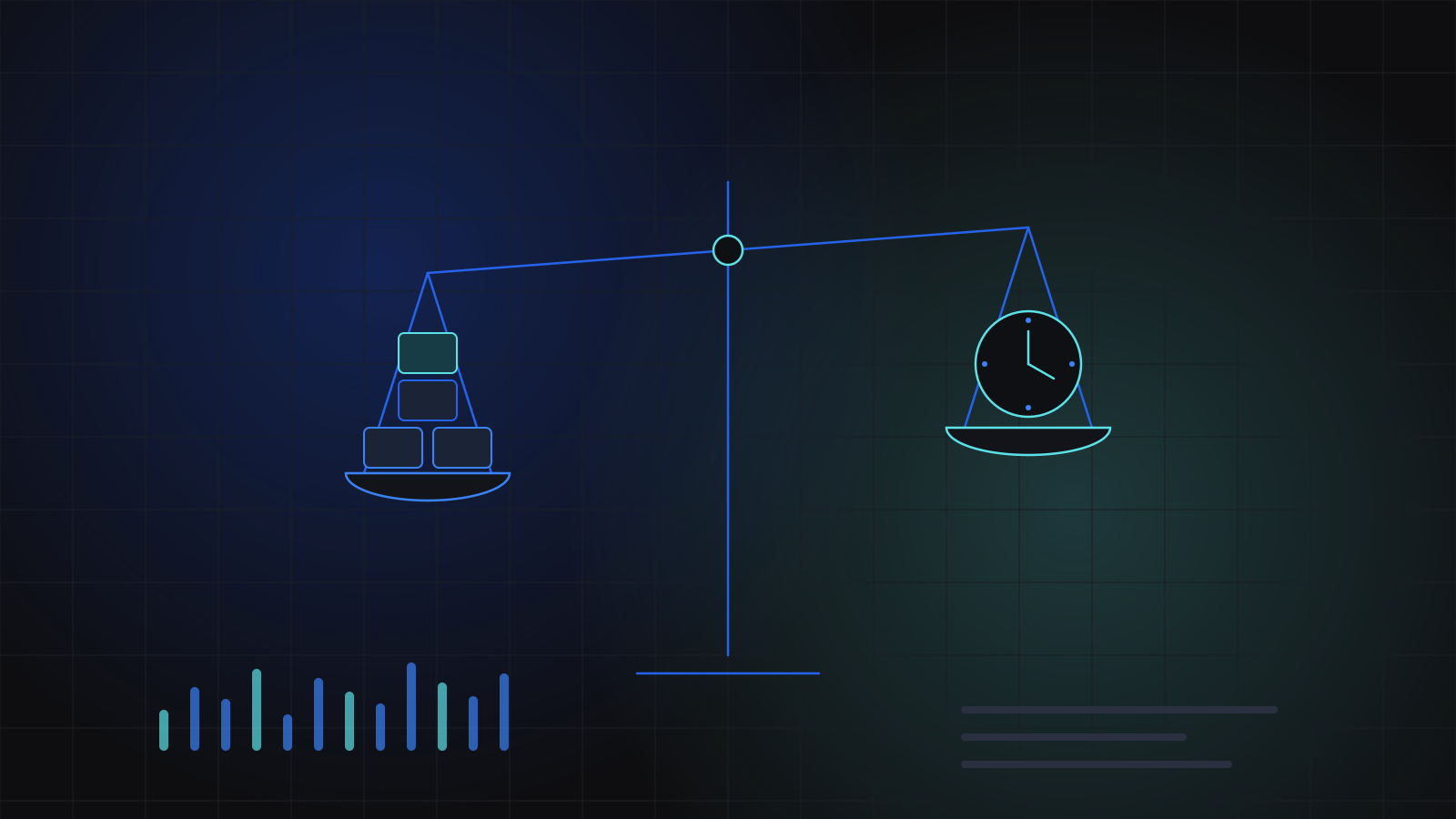
Custom software development cost is set mostly by three things: how much you ask the software to do, how certain that scope is, and who you need on the team to build it. The pricing model you pick, whether fixed scope, time and materials or a dedicated team, changes less about the total than about who carries the risk when the work changes. This guide walks through each driver so you can read a quote properly and compare two of them fairly.
What actually drives custom software development cost?
Every estimate is an attempt to predict effort, and effort comes from a fairly short list of sources. When a number looks high or low, it is almost always because one of these was sized differently from what you had in mind.
- Scope and business rules: the number of user roles, screens and workflows, and how many special cases each workflow has. A booking flow with refunds, partial payments and timezone handling is a different job from a simple contact form.
- Integrations: every payment provider, CRM, accounting package or legacy system you connect to has its own API, sandbox, limits and failure modes, and each one needs to be built, tested and monitored.
- Data and migration: moving existing records into a new system safely usually means mapping old schemas, cleaning data and rehearsing the move before doing it for real.
- Platforms: a web app, an iOS app, an Android app and an admin console are four surfaces to design, build and test, even when they share a backend.
- Quality requirements: security, performance targets, audit logging, uptime expectations and the handling of sensitive data all add engineering and testing time.
- Design depth: rough wireframes, a polished interface and a full design system are very different amounts of work.
- Team shape and seniority: the mix of engineers, designers, QA and project management the work needs, and how experienced they are.
- Life after launch: hosting, monitoring, bug fixing, dependency updates and new features all continue once the product is live.
Why do two quotes for the same idea differ so much?
When two quotes for the same idea differ widely, the gap usually comes from different assumptions rather than from one vendor being greedy and the other generous. One quote includes an admin console, automated tests, deployment pipelines and a staging environment. The other assumes you will manage content in the database by hand and deploy from a developer's laptop. Both can be honest. Only one describes the product you will actually need in six months.
The quickest way to compare quotes is to ask each vendor for two lists: what is included, feature by feature, and what is explicitly out of scope. The second list is usually the more revealing one.
A quote is only as good as the assumptions written underneath it.
Fixed scope pricing: when does it work?
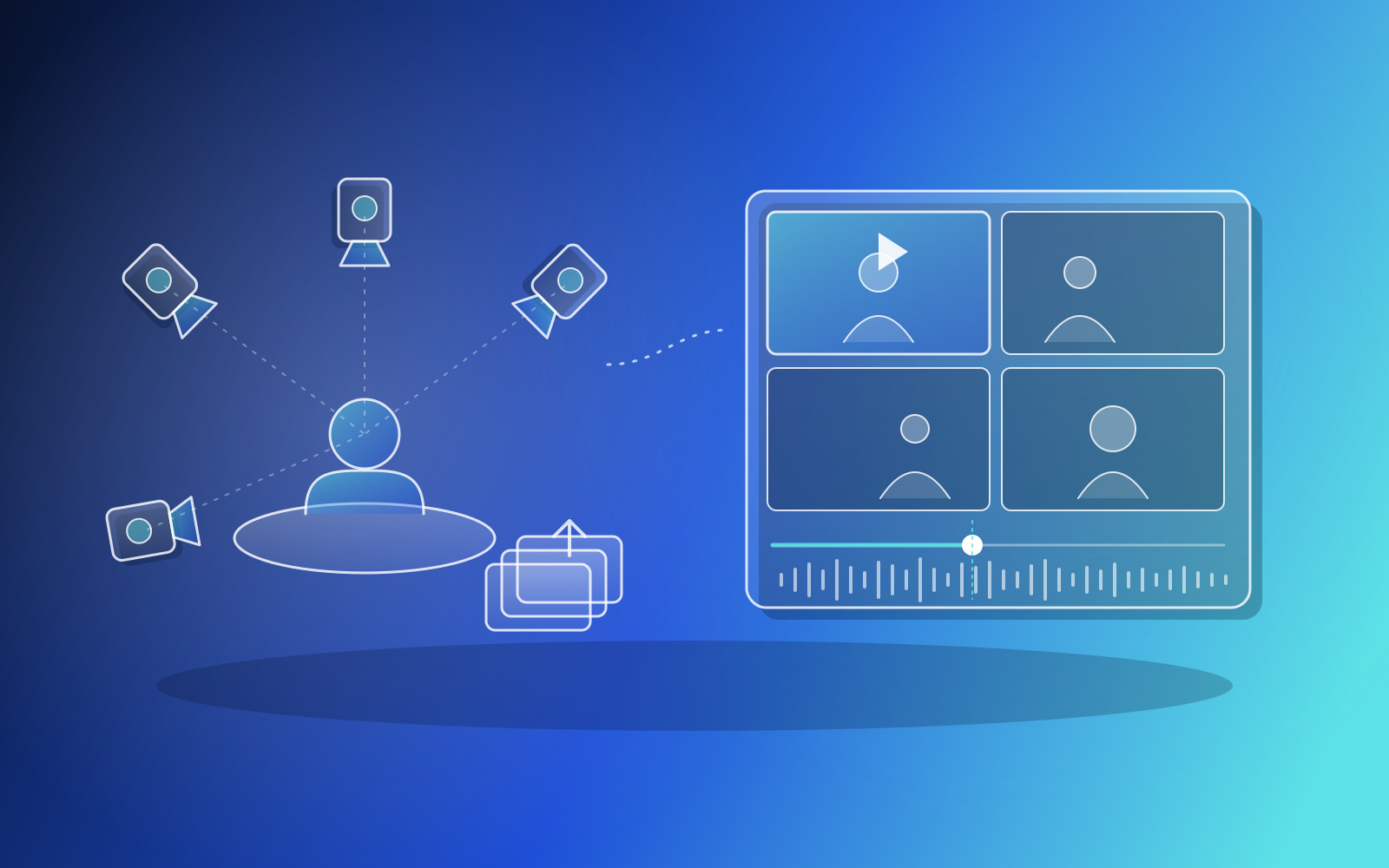
With a fixed scope engagement, you agree a defined set of features, a price and a timeline up front. The vendor carries the estimation risk, which is why a sensible fixed quote includes a buffer for the unknowns. Buffers belong in any honest estimate. In one of our projects, a multi-camera video MVP, we agreed a 22-day estimate with a 10-day buffer after writing a stack evaluation that the client's CTO reviewed. A buffer like that is not padding: work such as synchronising several video angles in one player carries real technical uncertainty, and an honest estimate says so.
Fixed scope works best when requirements are clear and stable, such as a well-defined MVP backed by a written specification. It works less well when you expect to learn and change direction during the build, because every change becomes a change request, and the relationship starts to revolve around the letter of the specification rather than the product.
Time and materials: paying for the work actually done
Under time and materials, you pay for the hours or days the team actually works, usually against a prioritised backlog you control. You carry more of the risk, but you gain flexibility: you can reorder priorities after every sprint, drop features that stop making sense and add ones your users ask for.
This model suits products that are still evolving, and it is often the only fair option for work with large unknowns, such as taking over an inherited codebase nobody has documented. It depends on transparency. You should expect regular demos, clear reporting of time against tasks, and a backlog that shows what has been done and what is next.
Dedicated team: a predictable monthly cost for stable capacity
A dedicated team gives you a group of engineers with an agreed composition, working on your product over months or years, for a predictable monthly cost. Instead of pricing individual features, you are buying capacity and continuity. The team learns your domain, your codebase and your users, which makes each later feature cheaper to deliver than it would be for a team starting cold.
The continuity is easy to see on long builds. We were the core engineering team behind a multi-tenant customer-data platform for small businesses, delivering it module by module: onboarding and subscriptions, a real-time customer dashboard, campaign tools and integrations. A dedicated team makes most sense when the product is long-lived and the roadmap will keep changing.
How can you keep custom software development cost under control?
The biggest savings come before a line of code is written, when the scope is still cheap to change.
- Start with a discovery phase that produces a written scope, a feature list and an estimate broken down by feature, not a single number.
- Cut the first release down to the smallest version that solves the core problem, and keep a visible list of what comes later.
- Use proven services for commodity pieces such as authentication, payments and email, and spend custom effort where your product is different.
- Decide early which platforms you really need at launch. A responsive web app can often come before native apps.
- Agree a written scope baseline and a simple process for changes, so everyone knows what a new request does to the timeline.
- Budget for hosting, monitoring and maintenance from the start, rather than discovering those costs after launch.
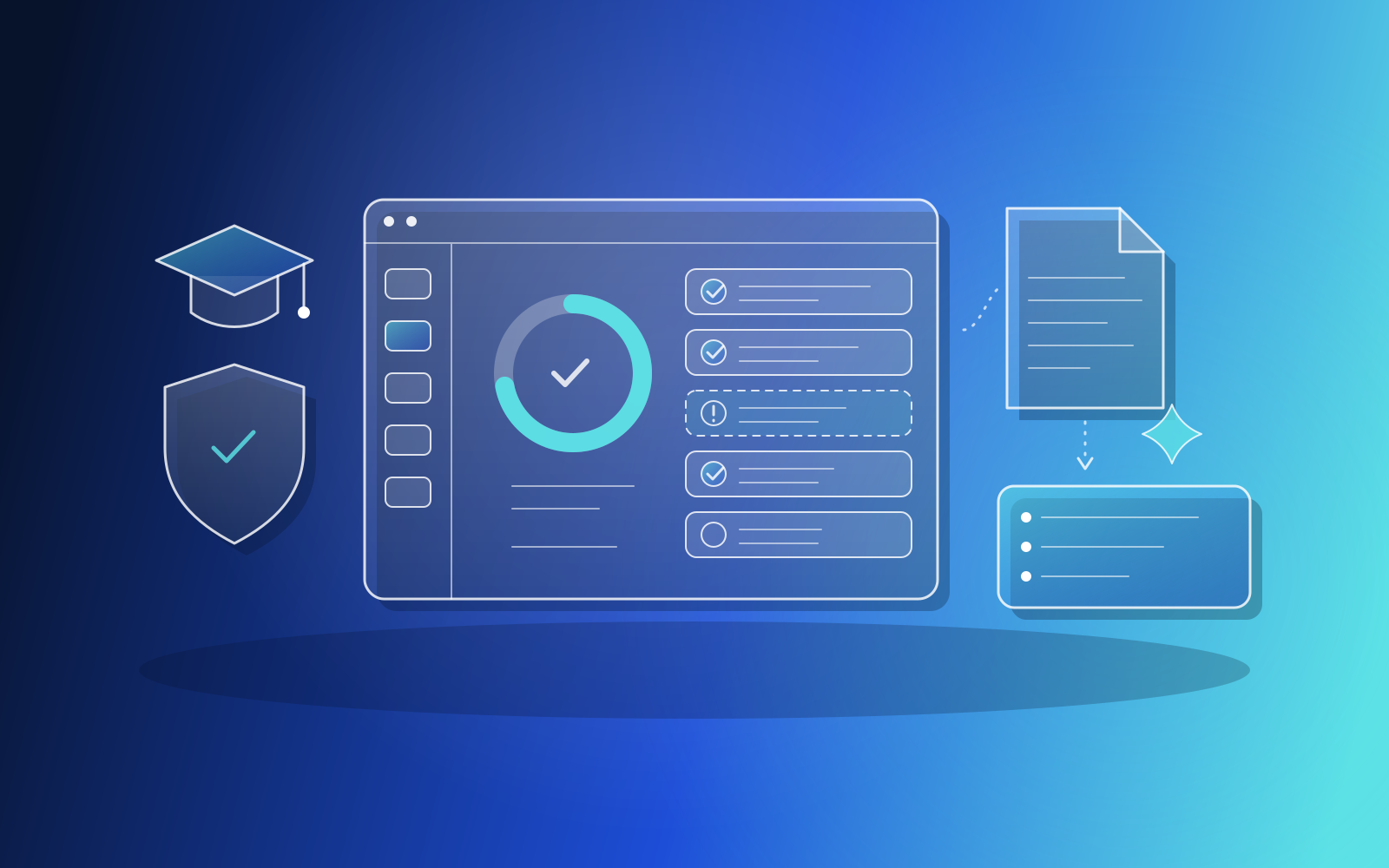
Scope discipline matters even mid-project. In one of our projects, an MVP compliance platform for the education sector, scope and cost friction arose partway through. We set a written scope baseline and moved to wireframe-first reviews, so screens were agreed before they were built, and the MVP went live on the client's domain.
What should a good software estimate include?
A useful estimate helps you make decisions, not just approve a budget. Before we build anything through our Custom Software Development service, we follow the same path we use for every engagement: discover, design, develop and deploy, then support and evolve. The estimate that comes out of discovery should show:
- A breakdown by feature or module, so you can see what each part of the product costs relative to the others.
- The assumptions behind each figure, and a clear list of what is out of scope.
- The team composition and the role each person plays.
- A timeline with milestones you can check progress against.
- The main risks and unknowns, and how they are covered, whether by a buffer, a spike or a phased plan.
- What happens after launch: hosting, support and how further work will be priced.
For the education compliance MVP mentioned above, that meant an MVP review, a day-wise estimate and a software requirements specification before design started. It is more work up front, and it is the cheapest insurance against a budget surprise later.
Key takeaways
- Custom software development cost comes from scope, integrations, data migration, platforms, quality requirements, design depth, team shape and post-launch support.
- Quotes differ mainly because of assumptions, so always ask what is included and what is out of scope.
- Fixed scope suits stable, well-specified work and needs an honest buffer; time and materials suits evolving products and large unknowns.
- A dedicated team trades per-feature pricing for predictable monthly capacity and domain knowledge that builds over time.
- The cheapest time to control cost is before development starts: discovery, a trimmed first release and a written scope baseline.
- Process
- Pricing
- Custom Software
Related services
Related case studies
EducationSaaS
Education compliance trust-management platform
We designed and built an MVP compliance platform for the education sector, where organisations and suppliers see which regulations apply, link required items, upload evidence and track gaps. It includes AI summaries of uploaded compliance documents and runs on a cloud stack we set up and handed over.
OtherWeb application
Multi-camera synchronised video publishing platform
We took a multi-camera video concept from sketches to a live MVP in about six weeks. Creators upload several synchronised angles of the same take, and viewers switch between them mid-playback with audio staying in sync, all on the client's own cloud account.
SaaSSaaS
Multi-tenant customer-data platform for small businesses
We were the core engineering team behind a multi-tenant customer-data platform for small businesses, delivering onboarding and subscriptions, warehouse-backed insights, a real-time customer dashboard, campaign tools and e-commerce and accounting integrations on a serverless cloud stack.