Product & Design · 22 Sep 2026 · 5 min read
How to build an MVP: a practical guide for founders
How to build an MVP that real users can try: define one core flow, cut scope hard, design first, pick a proven stack and launch early. A step by step guide.
If you are working out how to build an MVP, the short answer is this: pick the one problem your first users care most about, design the smallest flow that solves it end to end, build it on a proven stack, and put it in front of real people as soon as it works. Everything else waits for evidence. Below is a step by step process, from the first scoping call to launch day.
What is an MVP, really?
A minimum viable product is the smallest version of your product that real users can use for its main purpose, so you can learn whether the idea works. It is not a pitch deck, and it is not a clickable mockup, although both are useful earlier. The word minimum applies to scope, not to quality. An MVP with three features that all work reliably teaches you far more than one with twelve features that half work, because users judge the idea through whatever friction you put in front of it.
It also needs to be viable for you. If the point of the MVP is to show investors or win early customers, it needs to run on infrastructure you control, with an account and data model that can grow into the real product rather than being thrown away.
Step 1: Define the core flow and cut the scope
Write down, in one sentence, who the product is for and what they will be able to do that they cannot do today. Then describe the single path through the product that delivers that outcome. For a marketplace, it might be: a buyer posts a need, a seller finds it, the seller makes an offer. That path is your core flow, and it is the only thing the MVP truly has to do well.
One of our clients came to us manually texting listing agents every day to match buyers with properties. The core flow was obvious once written down: agents post their buyers' needs, and listing agents find those buyers. We built a real estate marketplace around exactly that flow, and it went live within about three weeks of kickoff.
Every founder's first feature list is too long, and that is normal. The work is sorting it honestly. Ask of each feature: does the core flow break without it? If not, it goes on the later list.
- Keep: sign-up and login, the core flow, the minimum admin tools you need to operate the product, and basic analytics so you can see what users do.
- Usually later: multiple pricing tiers, detailed notification settings, social features, advanced search filters and native apps for every platform.
- Replace with manual work: anything you can do by hand for the first users, such as onboarding calls, approving listings or sending reports.
- Buy rather than build: authentication, payments, email delivery and hosting, all of which are solved problems.
If the core flow breaks without a feature, it stays. If not, it waits for evidence.
Step 2: Design before you build
Designing screens is much cheaper than rebuilding them. Wireframes and a clickable prototype let you test the core flow with a handful of target users before any code exists, and they give engineers an unambiguous picture of what to build. Our UI/UX Design & Prototyping service works this way: user flows first, then wireframes, then high-fidelity screens planned with the engineers who will build them.
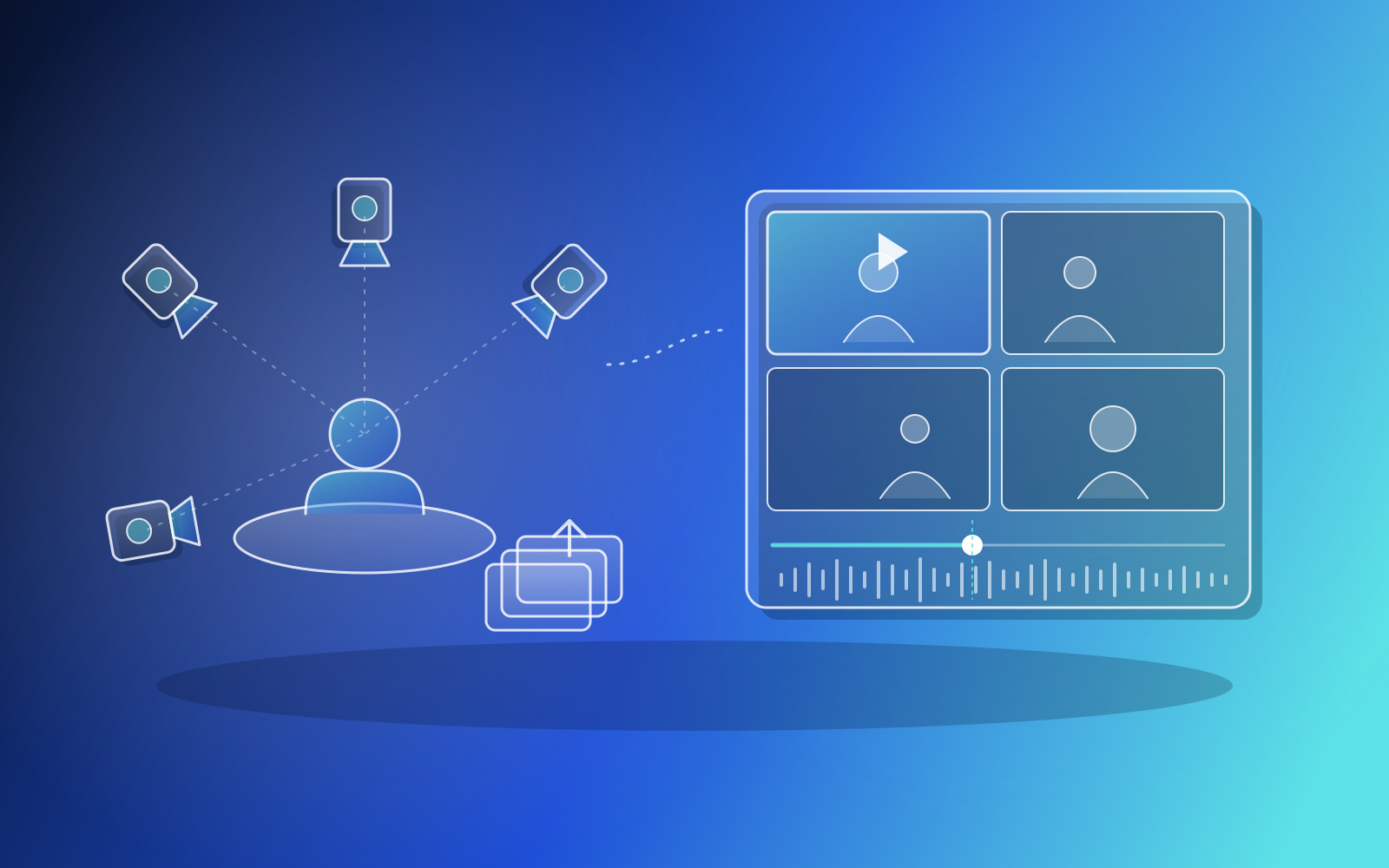
You do not need a finished brand to start. In one of our projects, a multi-camera video publishing platform where the client had only a concept and sketches, we designed a Figma system with a placeholder brand a week ahead of development, so design stayed just in front of the build rather than blocking it.
Step 3: Choose a stack you will not regret
An MVP is not the place for experimental technology. Choose well-supported frameworks your team knows, with large communities and plenty of libraries: for example React or Next.js on the web, with Node.js, Django or Laravel and a relational database such as PostgreSQL behind it. The goal is a codebase that a future team can extend without a rewrite.
On that same video platform, we wrote a stack evaluation that the client's CTO reviewed: React on the web, Django and PostgreSQL behind it. We also deployed it on the client's own cloud account, which mattered because the MVP was meant to show investors a product the company owned outright.
How long does it take to build an MVP?
It depends on the size of the core flow, the number of integrations and how quickly decisions get made on your side. A focused MVP with one clear flow can be measured in weeks; an MVP with payments, several user roles and third-party integrations takes longer. In one of our projects, the real estate buyer marketplace, the MVP went live about three weeks after kickoff. In another, the multi-camera video platform went from sketches to a live MVP in about six weeks.
The quickest way to lose time is to keep adding features during the build. Hold the scope, finish, launch, and let users tell you what the next feature should be.
Step 4: Launch, measure and decide what comes next
Launch to a small group of real users as soon as the core flow works end to end. Watch what they actually do, not only what they say. Are they completing the core flow? Where do they drop off? What do they ask for that you did not build? Those answers decide the next phase, and they are worth more than any amount of planning.
After the real estate marketplace went live, real users signed up and posted buyer needs, and the client came back for further paid phases, including a tool that automated the daily outreach they had been doing by hand. That is the pattern you want: a small, working product that earns the right to grow. Our Custom Software Development service is built around that path, from the first prototype through maintenance and support.
How to build an MVP without the common mistakes
Most MVPs that struggle do so for the same handful of reasons, and nearly all of them are decisions made before development starts.
- Building for every possible user instead of one clear group of early adopters.
- Treating the MVP as a throwaway, then discovering it has to become the real product.
- Skipping design and paying for it later in rework.
- Choosing a trendy stack that is hard to hire for or maintain.
- Waiting for the product to feel finished before showing anyone.
Key takeaways
- Start with one sentence describing who the product is for and the one core flow it must deliver.
- Cut every feature the core flow does not need, and do early work by hand where you can.
- Design and prototype before you build, so rework happens in Figma rather than in code.
- Pick a proven, well-supported stack and deploy on infrastructure you own.
- Launch early to real users, measure what they do, and let that evidence shape the next phase.
- Product
- MVP
- Startups
Related services
Related case studies
Real EstateWeb application
Reverse-prospecting real estate buyer marketplace
We built a real estate marketplace where agents post their buyers' needs so listing agents can bring them deals, live within about three weeks of kickoff. A follow-on automation tool scrapes listing details and sends personalised texts and emails to listing agents, replacing a daily manual task.
OtherWeb application
Multi-camera synchronised video publishing platform
We took a multi-camera video concept from sketches to a live MVP in about six weeks. Creators upload several synchronised angles of the same take, and viewers switch between them mid-playback with audio staying in sync, all on the client's own cloud account.