AI & Automation · 4 Aug 2026 · 3 min read
Shipping AI features into real products
Patterns that repeat across the AI products we've built: transcription pipelines, retrieval over your own data, a human kept in the loop, and controls on what the model costs and can see.
Transcription is a pipeline, not an API call
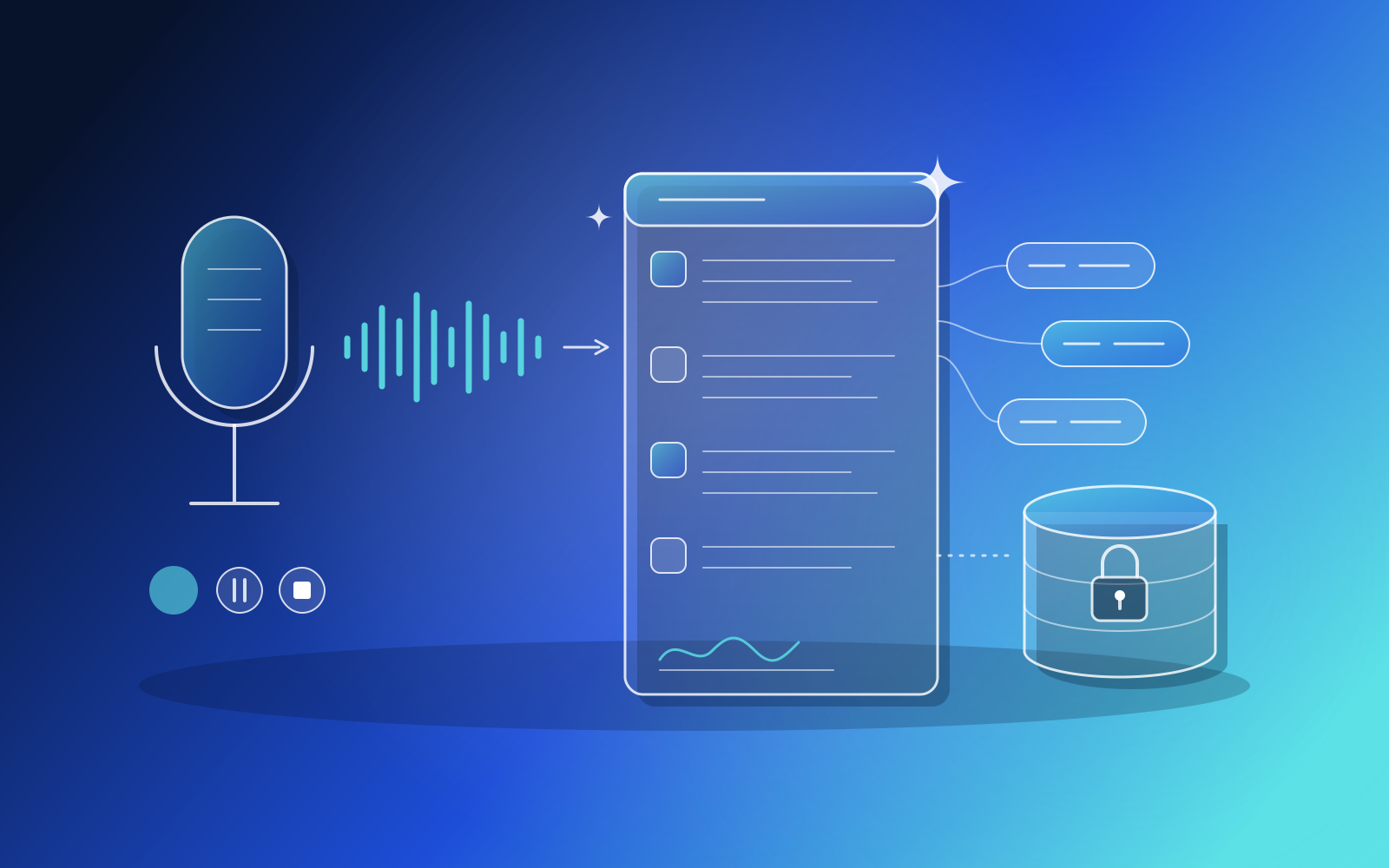
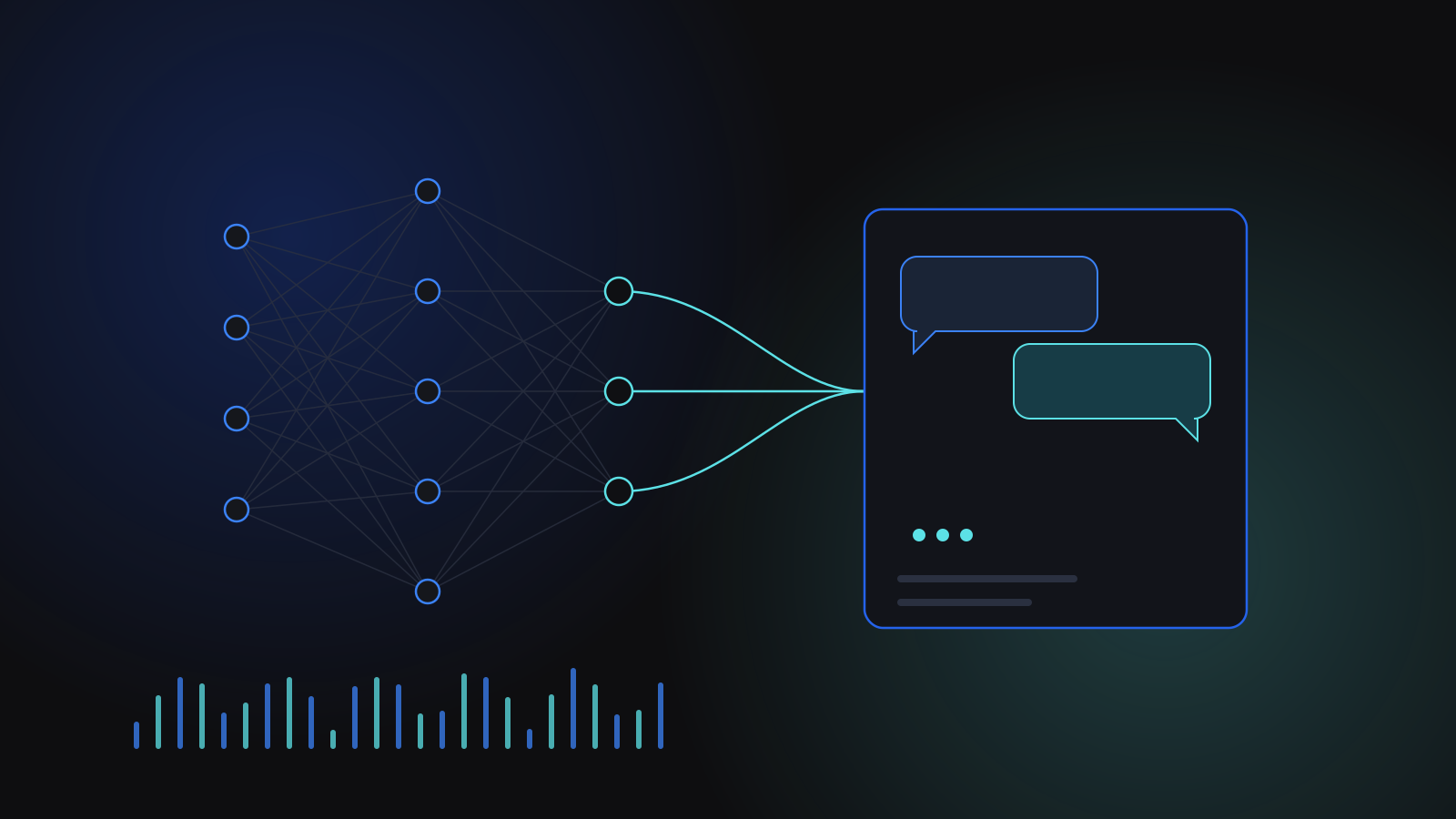
The products that turn audio into something useful are rarely just "call the transcription API." For an AI medical scribe, the pipeline records a clinical encounter with pause, resume and discard across sessions, transcribes it with PII redaction, later moving to real-time streaming transcription, and generates an editable, specialty-specific SOAP note with ICD-10 codes for general practice, mental health, naturopathy and fertility visits, all run through queued background processing so the interface stays responsive while the model works.
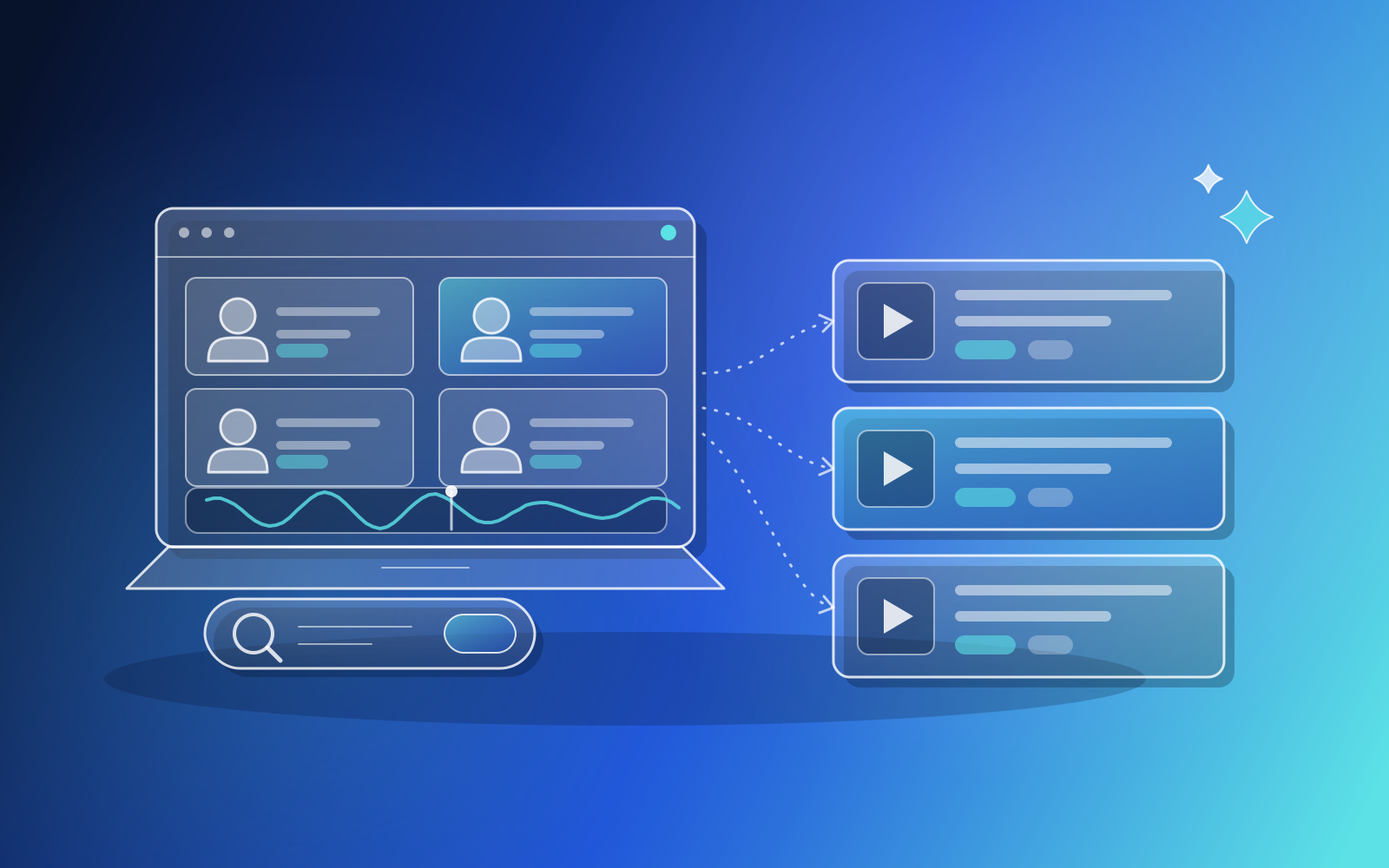
A researcher-facing product we built, Persona AI, follows a similar shape from the other direction. It conducts AI-moderated interviews and then extracts the relevant clips against a researcher's own target keywords, eliminating manual review, on a serverless backend built to handle real-time video processing and clip generation.
Sometimes it's a new product; sometimes it's a feature inside one that already exists
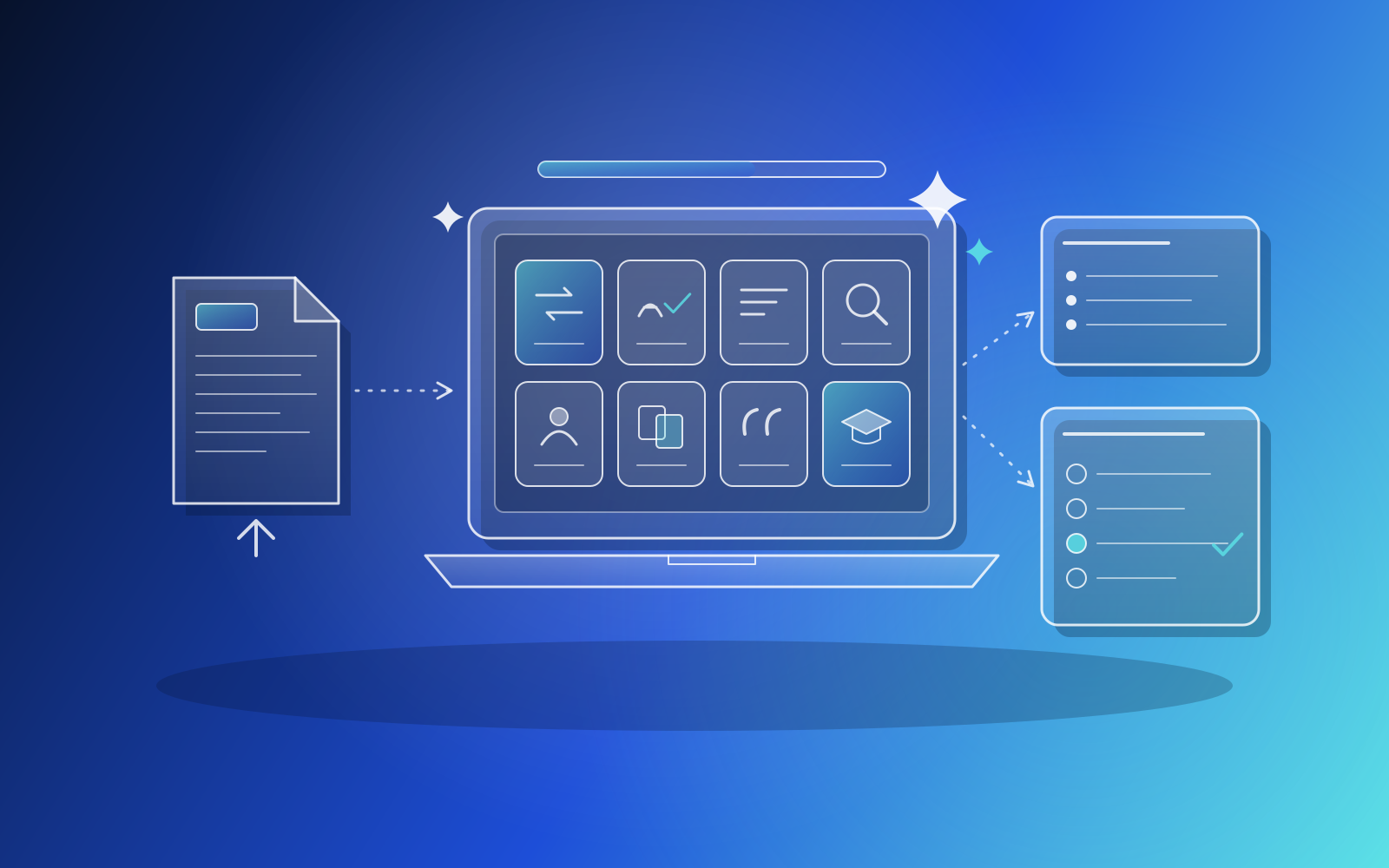
Not every AI feature we've shipped started as its own product. Living AI added conversational shopping and self-serve, customisable avatar videos directly into an existing e-commerce experience, and became one of the first to feature an app on the ChatGPT store. An AI study-and-writing platform took the opposite path, launching from scratch as a single product that bundles eight separate tools behind one subscription: paraphrasing, grammar, summarising, AI detection, humanising, plagiarism, citations and a study helper that turns uploaded documents into notes and quizzes. Students get all of it in one place instead of stitching several separate apps together.
Retrieval means grounding the model in your own data
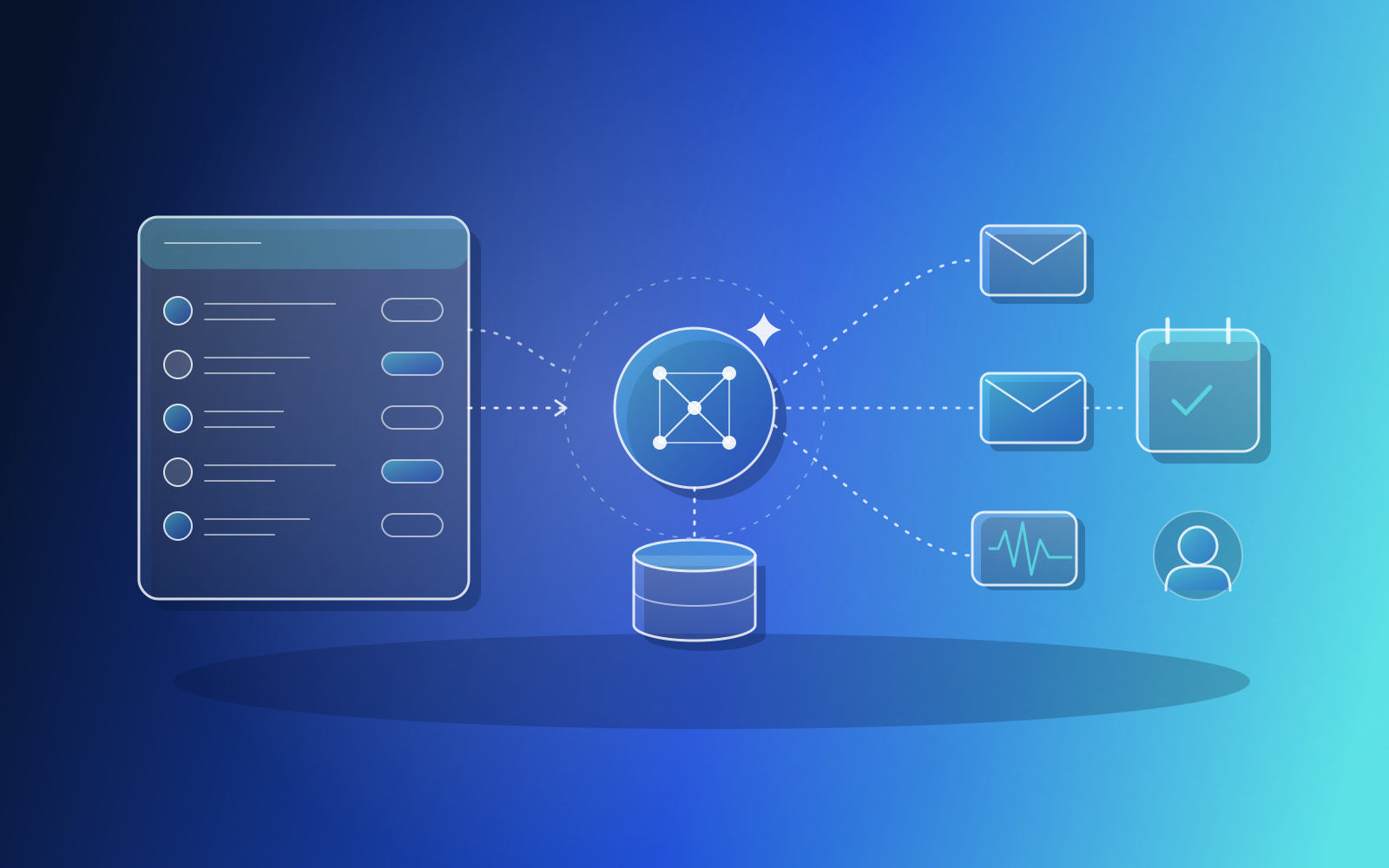
The AI products that hold up in production are the ones where the model answers from a specific company's own data, not just its training data. An AI sales-outreach product for CRM users generates and categorises emails using context retrieved from vector embeddings of a customer's own conversations, stored per tenant in a multi-tenant Postgres design with pgvector, so replies stay grounded in what that specific account's leads have actually said.
A conversion-optimisation agency's internal platform has laid the groundwork for the same approach: comment and thread embeddings in pgvector across 15 client workspaces for future retrieval.
The interesting engineering in an AI feature is rarely the model call. It's what you retrieve before you make it, and what you do with the answer after.
A human stays in the loop, on purpose
The medical scribe's notes are editable and require a clinician's e-signature before they count as final. The client's own physician measured medical-term recognition at 85-90% before further accuracy work.
The same instinct shows up earlier in the pipeline on other builds: for the study-and-writing platform, a large language model was chosen only after benchmarking alternatives for cost and accuracy. The same platform also keeps a per-feature prompt history and admin activity logs, so usage stays visible once the model is live.
Cost and privacy are engineering constraints, not an afterthought
Every one of these products stores what it processes somewhere, which makes privacy and cost part of the same conversation as architecture. The medical scribe's recordings and generated artefacts sit in S3, encrypted with KMS, with configuration in Parameter Store and single sign-on through IAM Identity Center for the engineers who reach them. The study-and-writing platform meters usage per feature too, with free-tier limits that tie cost directly to what a plan allows.
On the conversion-optimisation platform, a brand-voice research agent was split across chained calls specifically to fit inside serverless execution limits, and review-mining optimisations cut that pipeline's LLM calls by about 40% and database write load by about 75%, after runs had cost up to about $80 each. That's the trade-off running through most of these builds: ship the feature a large model makes possible, then spend the following weeks making sure it stays affordable once real users and real client data are on it.
- AI
- Machine Learning
- Product Engineering
Related services
Related case studies
HealthcareSaaS
AI medical scribe SaaS platform
We rescued and rebuilt an AI medical scribe for clinicians: it records encounters, transcribes them and generates editable, specialty-specific SOAP notes with ICD-10 codes. Alongside a React front end, subscription billing and video-meeting ingestion, we set up a secure AWS platform with encrypted storage, queued processing and automated API tests.
EducationSaaS
AI study and writing tools platform
We designed and built an AI study platform for students from scratch, with eight tools covering paraphrasing, grammar, summaries, AI detection, plagiarism, citations and a study helper that turns uploaded documents into notes and quizzes. The React and Django product runs on AWS with single sign-on, subscription billing and usage metering.
MarketingSaaS
AI sales-outreach automation SaaS for CRM users
We designed and built an AI sales-automation SaaS that plugs into a CRM and runs outreach end to end: an LLM agent writes and follows up on emails, leads are enriched, calls are recorded and transcribed, and everything threads back into the CRM. We delivered design, front end, event-driven backend and cloud infrastructure through to production.
MarketingSaaS
AI-powered conversion-optimisation agency platform
Extended an e-commerce optimisation agency's internal AI platform with real-time test-data sync, prioritisation and sprint planning, automated client slide decks, LLM research agents and embedding-based retrieval groundwork, and cut the LLM cost of its review-mining pipeline.