Product & Design · 22 Sep 2026 · 5 min read
Shopify vs custom ecommerce: when to build your own
Shopify vs custom ecommerce: when a hosted platform is the right call, when a custom build pays off, and the middle path most growing stores should try first.
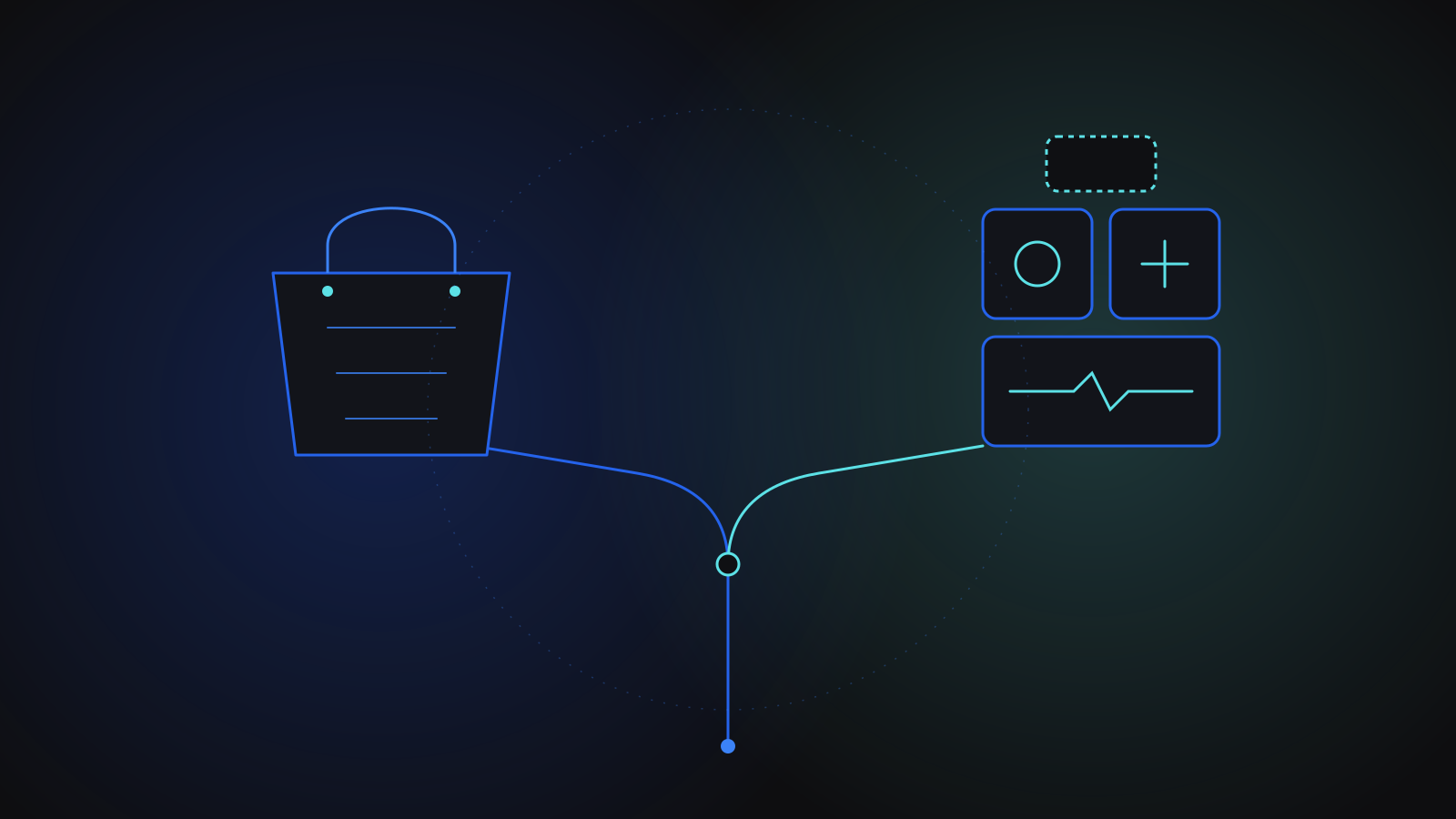
In the Shopify vs custom ecommerce decision, most brands selling their own products to consumers should start on Shopify and extend it. A custom build earns its cost when your business model does not fit a standard catalogue and checkout: marketplaces, bookings, split payments or pricing rules the platform cannot express. Often the honest answer is a middle path, and the skill is knowing where the line sits for your business.
What does Shopify do well?
Shopify gives you a hosted store, checkout, payments, themes, an app ecosystem and an admin that non-technical staff can run day to day. Hosting, platform security and much of the card-handling burden at checkout sit with the platform rather than with you. For a brand selling physical products, that removes a large amount of engineering you would otherwise have to build and maintain yourself.
It is also more flexible than many people assume. Themes are editable code, products support variants and metafields, and apps and APIs cover a wide range of extensions. A lot of what looks like a reason to go custom turns out to be a theme or app problem.
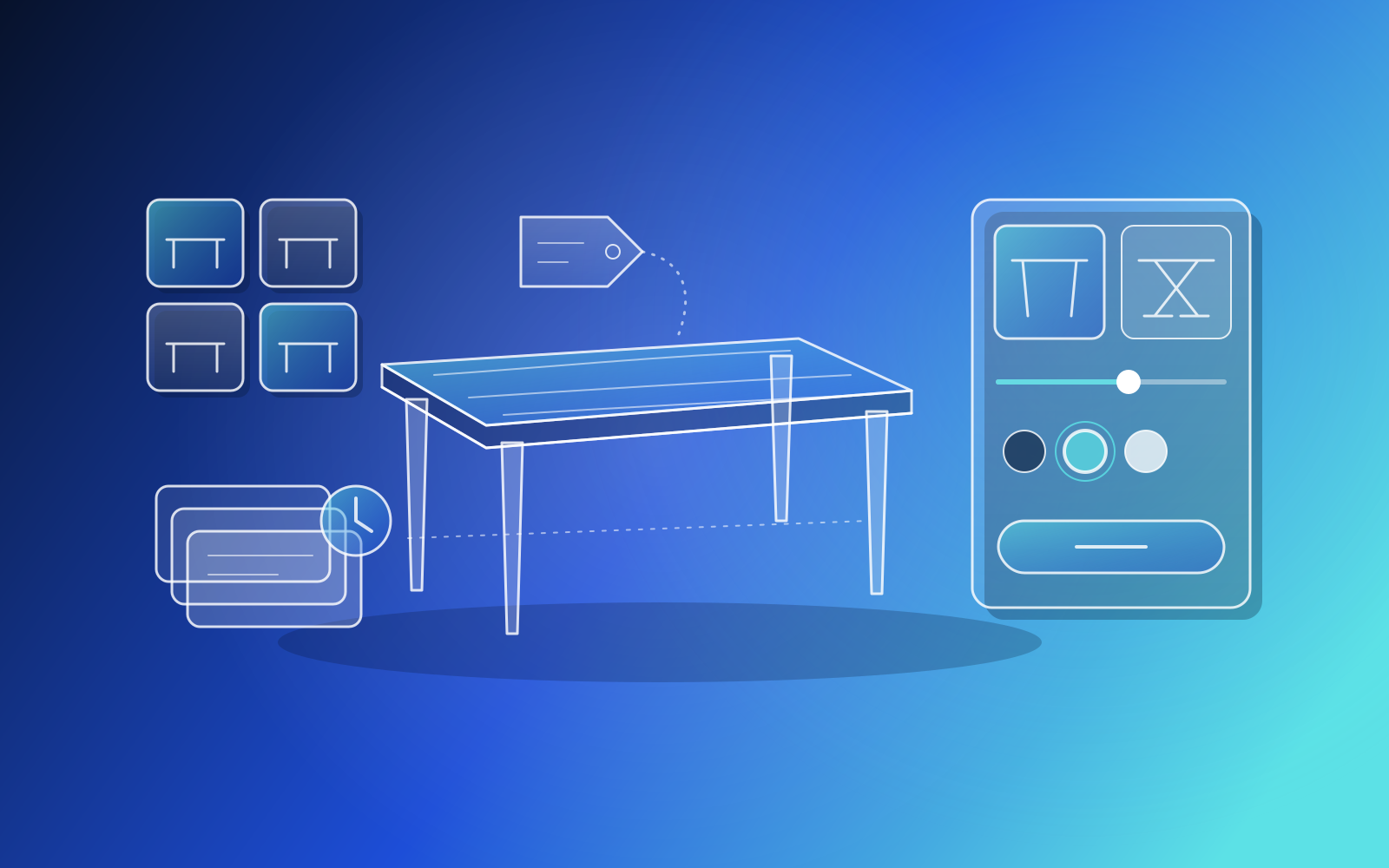
In one of our projects, a direct-to-consumer furniture brand wanted to launch a new solid-wood table collection with two new leg styles, height options and per-finish pricing, and asked for imagery that updates as shoppers switch options. The collection was built inside Shopify: a dedicated collection page, new variants with upcharge pricing and restructured navigation. When the same client needed an urgent lead-time change across roughly 200 Shopify products and 150 Etsy listings, it was completed in about four hours across both platforms.
Where does Shopify start to strain?
The limits tend to show up in a few predictable places:
- Business models that are not really a store: multi-vendor marketplaces, bookings with time slots, rentals, or subscriptions with unusual rules.
- Money that moves between several parties: split payments, commissions and delayed payouts to providers.
- Pricing and promotion logic assembled from several apps that conflict with one another.
- Deep integration with internal systems, where the store is only one part of a larger product.
- Heavy reliance on third-party apps, each adding cost, scripts and one more thing that can break.
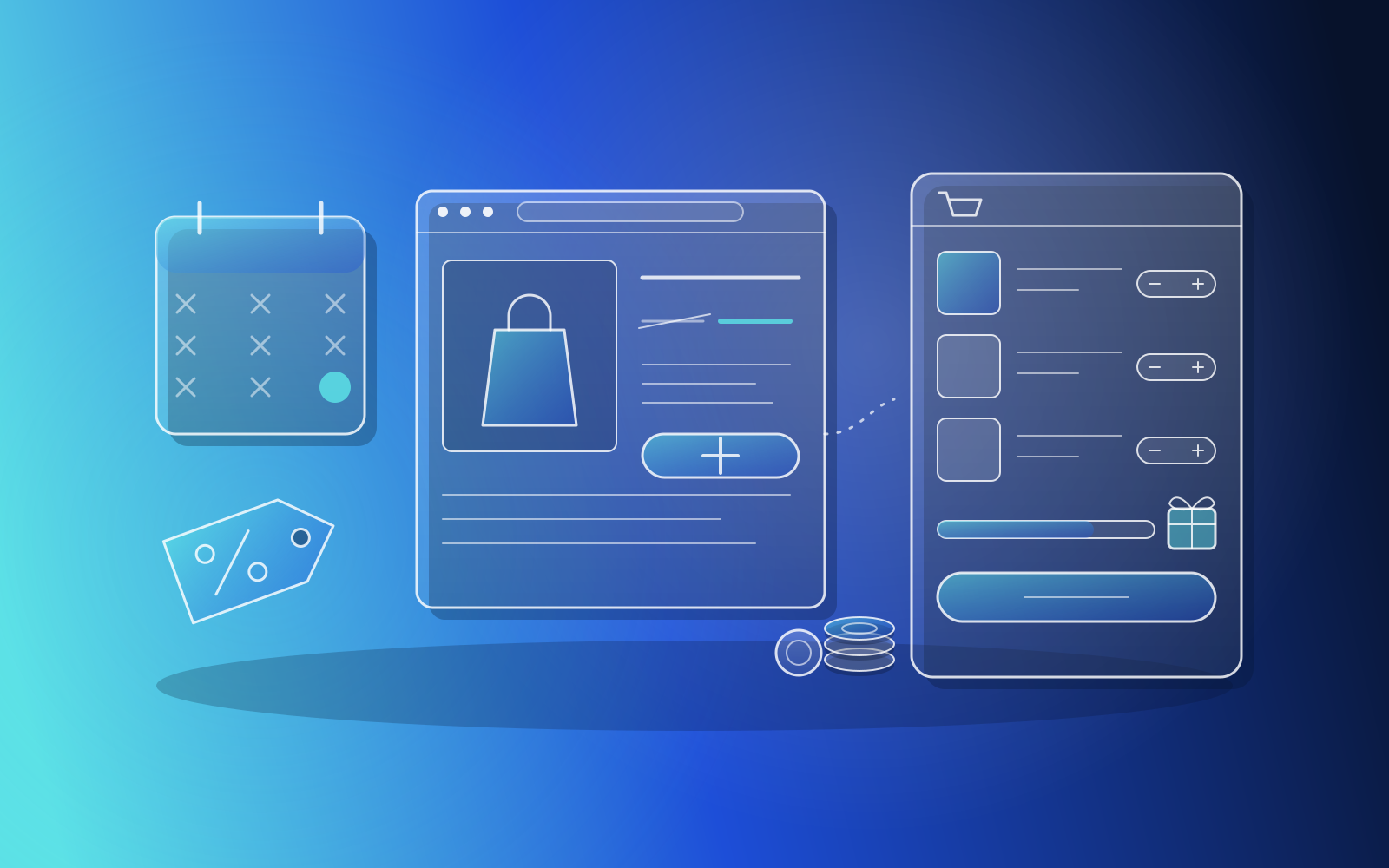
That last point deserves attention. Apps are the fastest way to extend Shopify and also a common source of trouble. In one of our projects, nine days before a major seasonal campaign, a direct-to-consumer brand's Shopify promotions stack was broken: add-to-cart produced quantities of zero, the cart sidebar flickered, and discount thresholds were hardcoded in one currency. Rather than patch a compromised install, the team duplicated the stable live theme, reinstalled the discount app from scratch on a clean base, and rebuilt the free-gift progress bar by hand when the app's version proved unreliable. The cart shipped working ahead of the sale. The fix kept the store on Shopify and treated its extensions as engineering rather than as plug-ins to keep stacking.
Most stores do not outgrow Shopify. They outgrow the pile of apps bolted onto it.
When is custom ecommerce worth building?
A custom build is worth it when what you sell, or the way money flows, is the product itself. In one of our projects, a founding team needed a booking marketplace for luxury in-home experiences. That meant guests, providers, partners and admins with different permissions, a timezone-aware availability engine with overlap checks, automatic release of unpaid slots, Stripe Connect split payments with payouts delayed until after each event, and white-label partner sites. None of that is a catalogue with a cart, and forcing it into one would fight the platform at every step.
Custom also makes sense when commerce is a feature inside a larger application, such as a SaaS product with in-app purchases or a platform where payment is one step in a longer workflow. There, a hosted store sits awkwardly beside everything else.
The trade-off is ownership. With custom ecommerce you own the checkout flow, the payment integration, security updates, hosting and every future change. Payment providers such as Stripe take on much of the card handling, but the rest of the system is yours to run and keep current.
Is there a middle path between Shopify and custom?
Usually, yes, and it is where many growing brands should land. Common patterns include:
- A customised Shopify theme with a small number of well-chosen apps, plus hand-built pieces where apps fall short.
- Shopify as the commerce back end with a custom front end, often called headless commerce, for brands that need a very specific shopping experience.
- A custom application for the unusual part of the business, such as bookings or a product configurator, connected to Shopify for standard products.
- Shared data flows, so orders and customers from the store feed your analytics, CRM or fulfilment systems.
Headless setups add a second codebase to maintain, so they are worth it only when the storefront experience is a genuine competitive advantage rather than a preference.
Shopify vs custom ecommerce: how do you decide?
Work through these questions in order:
- Can your products, variants and pricing be described with a standard catalogue? If so, lean towards Shopify.
- Does money flow only from the customer to you? If it splits between several parties, lean towards custom or a marketplace-capable payment setup.
- Is the hard part the store, or something around it? Build custom only for the part that is genuinely unusual.
- Who will maintain it? A custom platform needs engineers after launch, not only during the build.
- How many apps are you paying for just to make things work? If that number keeps growing, review the architecture before adding another.
What should your first step be?
If you are already on Shopify and feeling its limits, start with an audit of your theme and apps before planning a rebuild. Many problems turn out to be app conflicts, duplicated scripts or logic that belongs in one place. If you are starting fresh with an unusual model, write down how orders, payments and payouts actually flow, then decide which parts a platform can carry and which need building.
Our E-commerce & Payments service covers both sides: Shopify builds and rescues for stores that fit the platform, and custom commerce and payment systems for models that do not. The right answer is the one you can still maintain comfortably in two years.
Key takeaways
- In the Shopify vs custom ecommerce choice, most direct-to-consumer brands should start on Shopify and extend it carefully.
- Treat Shopify apps as code: each one adds cost, scripts and a new way to break.
- Go custom when the business model, not the storefront, is the hard part: marketplaces, bookings, split payments.
- Consider a hybrid that keeps standard products on Shopify and builds only the unusual part.
- Whichever you choose, plan for who maintains it after launch.
- E-commerce
- Shopify
- Payments
Related services
Related case studies
E-commerceE-commerce
Shopify furniture merchandising build
We built a new solid-wood table collection for a direct-to-consumer furniture brand on Shopify: a dedicated collection page, new leg-style variants with height and finish pricing, restructured navigation and in-house photo retouching. We also turned around an urgent, compliance-driven lead-time change across roughly 200 Shopify products and 150 Etsy listings out of hours.
E-commerceE-commerce
Shopify cart and promotions rebuild for a campaign
Nine days before a major seasonal campaign, we rescued a broken Shopify promotions stack for a direct-to-consumer brand: rebuilding a third-party discount integration from scratch on a clean theme, hand-building a free-gift cart progress bar, and fixing currency-specific thresholds and cart re-render defects. The cart shipped working ahead of the sale start.
OtherWeb application
Luxury experiences booking marketplace
We turned a front-end prototype into a live booking marketplace for luxury in-home experiences, adding the backend, booking engine, split payments with delayed payouts, white-label partner sites and an admin console, deployed on Google Cloud with infrastructure as code.